The process of producing flour becomes more challenging when one has to grind large amounts of wheat on a daily basis. Small domestic grinders may be fine for occasional needs, but many bakeries, food establishments, groceries, flour shops, restaurants, and commercial kitchens require special equipment which would help them to grind large amounts of wheat and do not interfere with workflow.
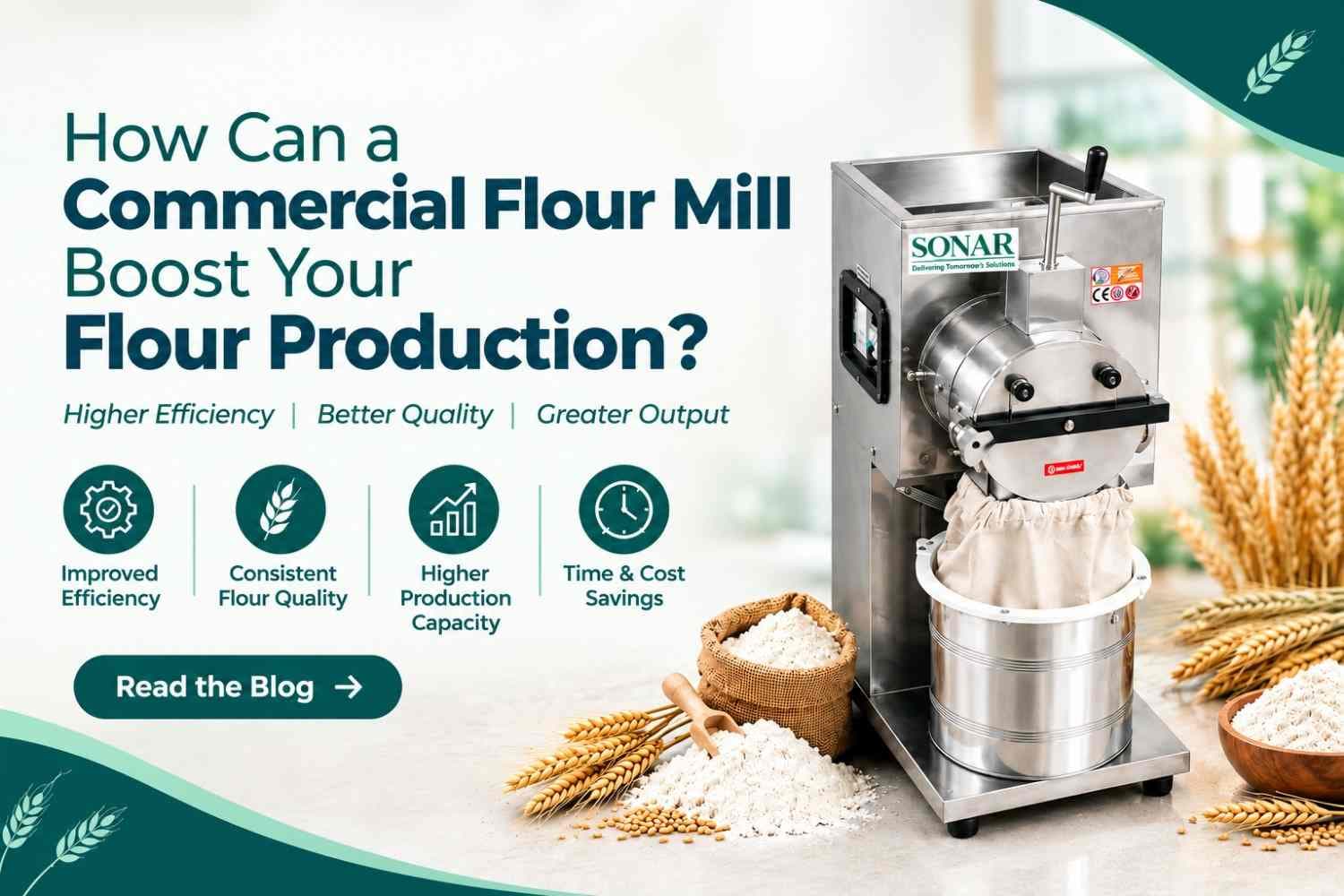
A Commercial Flour Mill can bring more order into this process, giving businesses an opportunity to grind bigger amounts of wheat in a systematic and effective way. Having the proper equipment will enable businesses to enhance their production abilities, have stable quality of flour and save their time from re-grinding.
For those who intend to enlarge their flour production, Sonar Appliances produces special equipment for processing of different kinds of food. However, before making a purchase, it is necessary to know about the benefits that a Commercial Flour Mill can bring to one's daily activities.
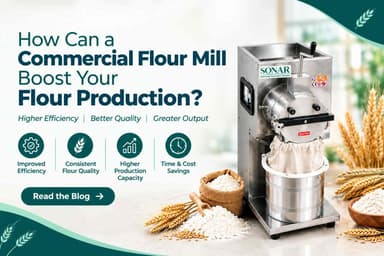
How Does a Commercial Flour Mill Increase Production Capacity?
However, the most important reason why business enterprises tend to use commercial flour milling machines is the necessity of milling more grains in a shorter period of time.
Commercial machines have been created to work under normal conditions and with bigger amounts of materials than domestic ones. Thus, it will be perfect for those companies that have to produce flour constantly within one day.
High capacity may allow businesses:
- Milling more amounts of wheat
- Minimizing repetitions of milling procedures
- Completing orders in shorter time
- Keeping order in the manufacturing process
- Handling greater demand per day
- Minimizing downtime during peak loads
The exact capacity will depend on the model of the machine, type of grains and other factors, so the buyer must choose appropriate capacity.
Why Is Consistent Flour Quality Important for Businesses?
A proper industrial flour mill can deliver better consistency in the grinding process, as long as it is well-managed and operated.
The following are some of the uses of consistent milling in industries that produce:
- Wheat flour
- Atta
- Bakery supplies
- Restaurant supplies
- Packaged flour
- Milled flour for customers
Businesses that sell flour to their clients can also benefit from consistency in their products.
How Can a Flour Mill Save Processing Time?
Time is another crucial element of the commercial processing of food. If the staff has to spend a lot of time processing wheat, other actions can be hindered.
A proper commercial flour mill can assist in optimizing the process of grinding, since it will allow handling bigger amounts of grain in one cycle. It will enable the staff to perform other tasks, including cleaning, packaging, weighing, order processing, and dealing with customers.
It can be especially helpful if there are increased demands for their services. For instance, the flour store can get a few orders at once. With appropriate equipment for commercial flour production, this can be managed without the need for many cycles of grinding.
What Should You Consider Before Buying a Commercial Flour Mill?
Some things to consider before buying machinery include:
- Capacity required: Determine the amount of wheat that needs to be processed daily.
- Hours of operation: Determine the frequency with which the machinery would be used.
- Space available: It should be determined whether the machinery can fit easily into your working area.
- Power requirements: The electrical set up of your place should be able to handle the machinery.
- Type of flour needed: Whether you require finely ground or just regular flour.
- Operability: The machinery should suit those who will operate it.
- Cleaning: The cleaning of the machinery should be easy.
- Maintenance: How easy is it to maintain the machinery?
- Construction: The commercial machinery should be durable.
These considerations will help avoid buying machinery that is not only too small for your needs but also oversized for what you really need.
How Is a Commercial Atta Chakki Different From a Commercial Flour Mill?
Generally, a Commercial Atta Chakki will be chosen if the business intends to grind wheat to obtain atta, and a Commercial Flour Mill could be selected to meet the business’s flour processing needs commercially.
This depends on what kind of flour they intend to manufacture, the quantity needed, and their intended grinding processes.
The businesses shouldn’t go for equipment just because it has more capacity. The equipment should be able to cater to what they will sell.
For instance, a business concentrating on fresh wheat atta will have different needs from a food processing company that manufactures various types of flour.
Can the Same Business Use a Cold Press Oil Machine?
Some of the food processing industries could even make oils along with their flours. The A Cold Press Oil Machines will come in handy for making oil from the appropriate seeds without using any high temperature process.
But the oil extraction and milling are two different operations that need different machines.
If the food-processing industry intends to use both these machines, then they have to take into account various things concerning the machines.
Why Choose Sonar Appliances for Commercial Flour Milling Equipment?
It will do no harm if Sonar Appliances is sought by business enterprises looking for food processing machinery that is appropriate for their manufacturing needs.
It specializes in the manufacturing of machines that will suit applications like flour milling and other food processing activities. The customer will talk about his production quantity, available space, operating needs, and application he intends to use before buying the machine.
Such an approach will prove very helpful because the machine should be selected according to the working needs of the business enterprise.
The needs could be that of a flour mill, bakery, restaurant, or any other commercial business activity.
Key Takeaways
- A Commercial Flour Mill can be very helpful for businesses that wish to grind more wheat.
- High capacity will enable faster processing and higher order volumes.
- Uniform grinding will be required by businesses that are regularly processing flour.
- The machine's capacity should correspond to the real needs of the business in terms of production capacity per day.
- The power requirements, space, maintenance, operating and grinding requirements need to be verified before purchasing.
- If the business focuses only on wheat atta then a Commercial Atta Chakki would be a better option.
- Cold Press Oil Machines have a different application for food processing.
- Sonar Appliances could be a good choice for commercial flour processing equipment.
Frequently Asked Questions
Whom Should a Commercial Flour Mill Suit?
Flour shops, bakeries, restaurants, catering businesses, grocery stores, food companies, and other commercial ventures that require the grinding of wheat regularly can consider using a flour mill.
How to Determine the Capacity of the Flour Mill?
Make an estimate of the average amount of daily wheat requirement you have and your busiest times. Choose a machine that will be able to work within your needs without being overly capacity.
Can the flour mill operate continuously?
This will depend on the machine and its manufacturer's recommendation. It is important that commercial ventures adhere to the manufacturer's recommendations as far as the operating time of the machine goes.
Is the Commercial Atta Chakki Machine Suitable for Any Business Dealing with Flour?
No, because Atta is not always the major need of all flour business ventures. There are flour companies whose main product is not Atta.
Is flour mill maintenance involved in cleaning?
Yes, because flour particles can build up during the milling process.





-1788005868418.png&w=384&q=75 "Domestic Flour Mill Manufacturers Offering Efficient and Durable Machines")
-2-1788005932658.png&w=384&q=75 "What Factors Affect the Performance of Cold Press Oil Machines?")
-1-1-1788005965746.png&w=384&q=75 "Why Should You Invest in a Commercial Flour Mill for Your Food Business?")